This week Kroger told its corporate staff that about 3,000 of them will be gone within three years. The next day Albertsons pulled its outlook and said it would leave the parts of the country where its stores underperform. If you shop at a Kroger, a Harris Teeter, a Safeway or a Tom Thumb, those two announcements are about your store.
Two weeks earlier, someone else made a decision about the same stores. A subsidiary of the Abu Dhabi Investment Authority agreed to put money into a $2.34 billion purchase of 115 grocery-anchored shopping centers, the buildings and parking lots that Kroger and Albertsons stores sit in. The firm that will control most of those centers was founded last year by the lead independent director of the company that will run them. Brixmor's filing names both of his roles. It describes no recusal.
The pieces sit in a Canadian material change report, an SEC filing, a Gulf trade outlet, a German property trade paper and a Delaware court docket. The staffing moves inside all four companies began months before any of it was announced. Below is who these people are, why each one matters, what it means for grocery prices and the food supply, and what I expect to happen next.
At a glance
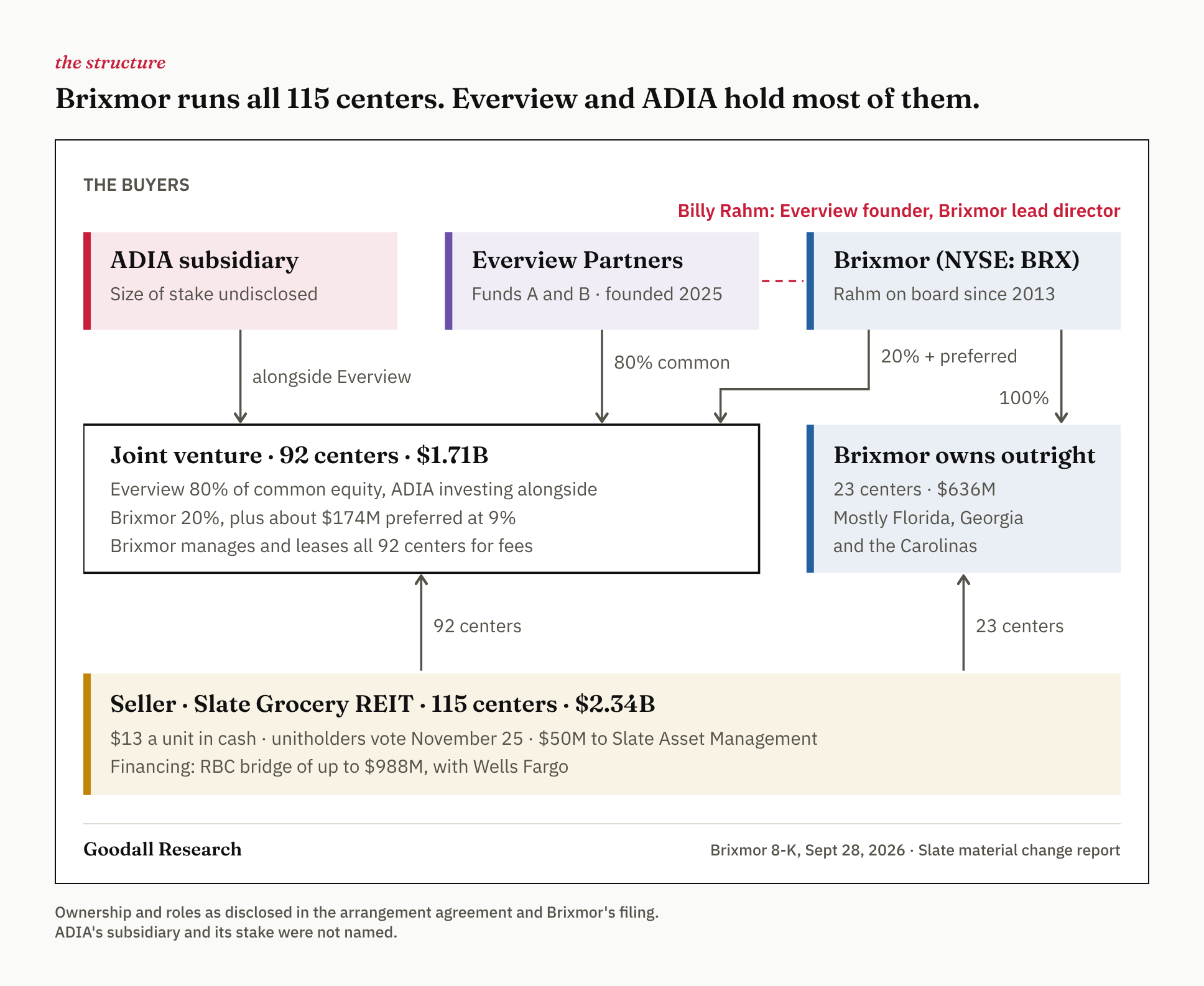
Brixmor owns the safest centers outright and runs all of them. The rest belong to a firm its own lead director founded, with Abu Dhabi money beside it.